SASKI did not begin with a single moment of inspiration. It grew from decades of building complex systems, living through setbacks, questioning assumptions, and learning that intelligence alone does not make a system dependable.
As AI began moving into healthcare, education, finance, employment, and autonomous systems, I kept returning to one question: how can an organization prove that its AI followed the rules when the outcome matters?
Policies and assurances from the AI itself were not enough. The safeguards needed to operate outside the AI, enforce clear boundaries, and produce verifiable evidence of what happened. That realization became SASKI.
Looking back, I can see that the unusual path I had taken through computers, architecture, marine systems, automation, networking, manufacturing, robotics, business successes, and painful setbacks had prepared me to recognize this problem. This is the story of that path and why it ultimately led me here.
"Creativity is just connecting things."
Steve Jobs, WIRED, February 1996
Steve Jobs said those words during an interview about creativity and innovation. He went on to explain how creative people connect their experiences to develop new ideas.
I've thought a lot about those words.
By the time you finish reading this story, I think you'll understand why.
If your family starts putting down your dreams, get away from their pessimism as fast as you can.
That might sound harsh, but I've learned something over the years. Sometimes the people closest to you can be the most damaging to your ambitions—especially when they equate multi-decade tenure in a single trade with the only true measure of stability.
Not necessarily because they want you to fail, but because they cannot see what you see. And rather than acknowledging that they don't understand your vision, they assume you're the one who doesn't understand reality.
I've spent much of my adult life building businesses, pursuing ideas, learning new technologies, and occasionally watching everything I'd worked for come crashing down.
Some setbacks were my fault. Others involved circumstances nobody could have predicted or controlled.
But to certain friends and family members, the explanations didn't seem to matter.
All they saw were failures.
And because many of my family members came from a generation where spending decades in the exact same career was considered the definition of stability and success, my frequent shifts only reinforced their perception. They saw separate, disconnected moves where I saw a single, continuous thread of mechanical and technical inquiry.
They saw someone who couldn't settle down.
Someone who kept starting over.
Someone who must be lost.
But they rarely asked what I'd accomplished along the way, what I'd learned, or why I believed the next opportunity was worth pursuing.
And that's where I believe they missed something important.
Just because someone can't see your vision doesn't mean it isn't real. And just because they don't understand your journey doesn't give them the authority to define it.
Let me explain.
It Started With an Apple Computer in 1979
My father was a computer programmer at L.L. Bean in Maine. He was working on the company's early computerized mail-order system.
In 1979, he put me in front of an Apple computer.
I was hooked.
I came from a family of lumberjacks and homebuilders. I grew up around people who could build things, fix things, and figure out how things worked.
In high school, I took architectural drafting, woodshop, and small-engine repair.
But my curiosity went far beyond any particular subject.
I wanted to understand how EVERYTHING in the world worked.
How did a car engine work? How did electricity travel through wires? How did buildings stay standing? How did computers communicate? How did people invent things nobody had ever seen before?
That insatiable curiosity was anchored by a Bible-based philosophy my parents taught me: that no single person is inherently better or smarter than anyone else. I never viewed myself as superior to others; I was just captivated by the mechanics of the world around me.
I wanted to understand all of it.
I was simply fascinated by how things worked, and I wanted to keep learning.
When the Internet started taking off, I sucked it down like a lost explorer in the desert who had just stumbled upon a freshwater oasis.
I spent countless hours exploring websites, reading, researching, and following whatever caught my attention.
Later, StumbleUpon became one of my favorite ways to explore. I could spend hours upon hours clicking through random websites, learning about subjects I hadn't even known existed.
I became addicted to learning.
Looking back, I think that's where something important developed.
I wasn't just learning isolated subjects. I was accumulating pieces of knowledge about how the world worked.
And eventually, I began connecting those pieces in ways I hadn't expected.
Mega Yachts, Architecture, and a Few Unplanned Detours

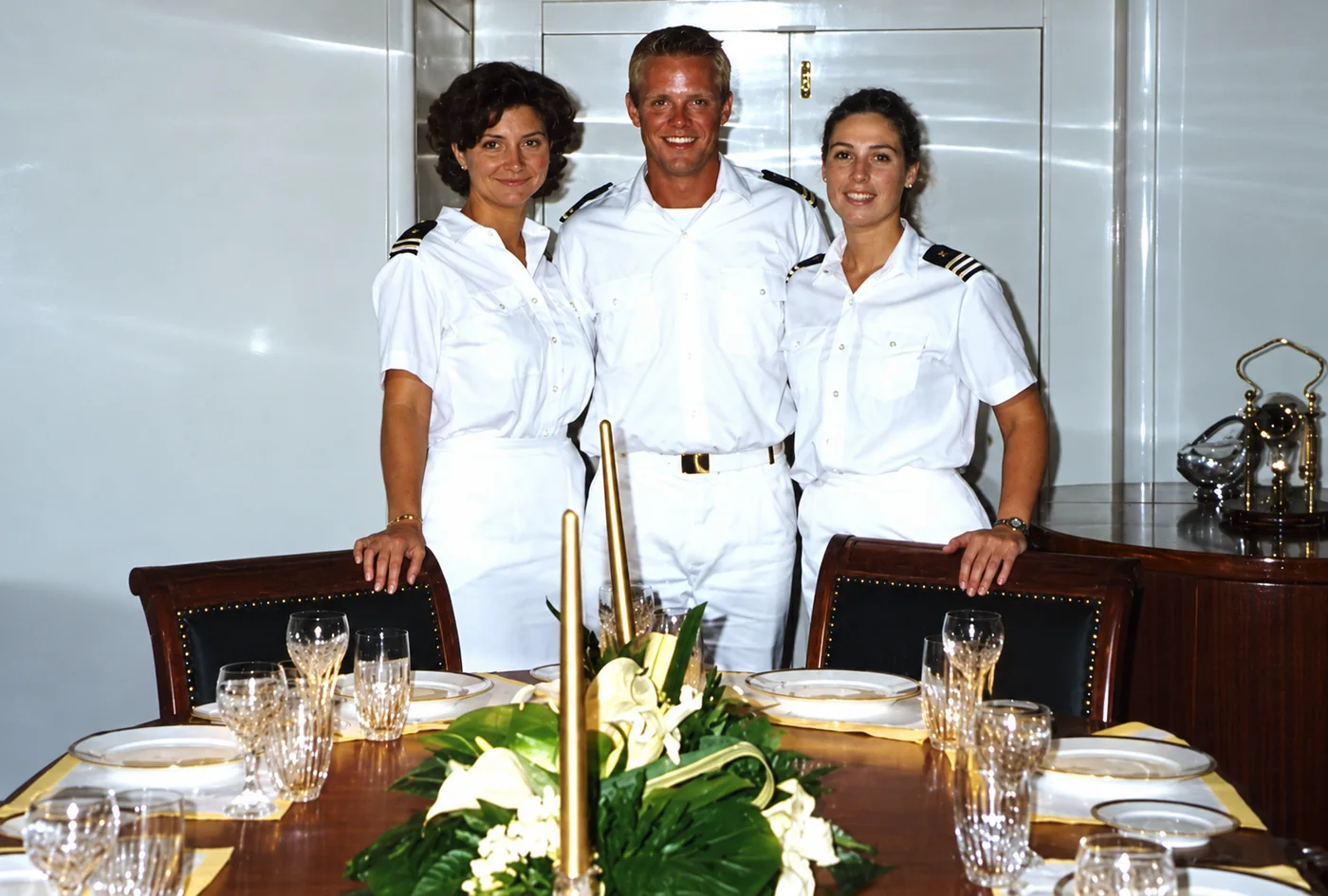
In 1994, my stepbrother called and suggested I come to Florida to work aboard mega yachts.
I did, and I had an absolute blast.
For roughly a year and a half, I worked aboard yachts, traveling through the Bahamas, cruising up the Intracoastal Waterway and Eastern Seaboard, and spending time docked in places like Nantucket.
I worked on everything from polishing hulls, maintaining engines, tenders, jet skis, and electrical systems to managing navigation, computers, and the countless mechanical systems aboard these floating luxury homes.
Then came a crossing from the Bahamas to the United States aboard a 95-foot yacht.
We encountered a horrible storm.
The boat was getting tossed around so violently that everything in the bow, including computer equipment, printers, and toiletries, was thrown all over the place.
It scared the hell out of me.
I decided I'd had enough of that adventure and headed back to Maine.
I spent the following years working on land, including architectural and engineering drafting projects, and running the technical support department at an enterprise IT service company.
Then my stepbrother called again.
He was in the Mediterranean and began telling me stories about the yachting lifestyle there.
Well, that sounded interesting.
So I went back.
This time I worked aboard considerably larger yachts, including vessels more than 150 feet long. One even had a helicopter aboard.
During my years in the industry, I visited more than 30 islands throughout the Bahamas and Caribbean. I cruised up the Tenn-Tom to West Virginia. I learned about diesel engines, jet propulsion, marine electronics, and the extraordinary engineering required to keep these vessels operating. It was the same practical mechanical foundation I'd built around homebuilders and woodshops, scaled up to massive marine engineering.
Then one day, while playing basketball with another crew member, our arms became entangled and I dislocated my shoulder.
The injury forced me to leave the industry again.
And the timing was unbelievable.
The very next charter aboard the yacht I'd been working on was Jennifer Lopez.
The yachting industry had blacklisted Puff Daddy. That was the account I received from fellow crew members who were still aboard, but Jennifer Lopez brought him along without informing our captain beforehand.
Sometimes life has an interesting sense of humor.
I returned to land and began working in architecture again.
I loved it.
But then another passion caught my attention.
Bicycle racing.
And that's when my life took another unexpected turn.
Forty Miles Per Hour of Combined Impact
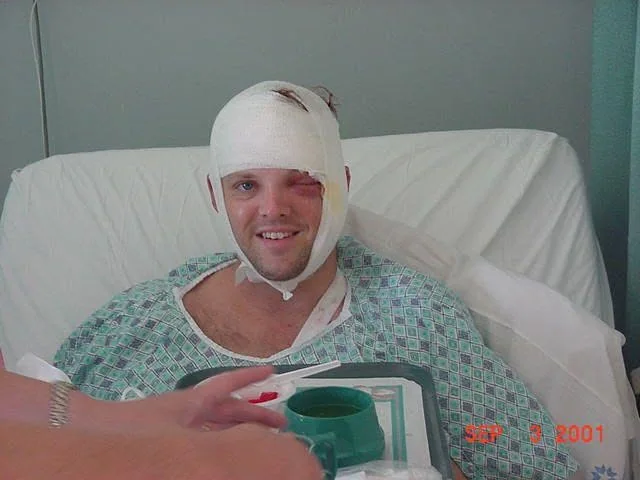
I was training five days a week, often riding along a quiet frontage road around the Fort Lauderdale airport.
One day, I glanced down at my bicycle speedometer.
When I looked back up, all I could see was the front of a pickup truck.
We collided head-on.
We were each traveling approximately 20 miles per hour.
My helmeted head went straight into the windshield, directly in front of the driver. I flipped over the cab, over the truck bed, and landed on my back on the hot Florida pavement.
I spent four days in the hospital.
My recovery would eventually require six months of physical therapy.
Ten days after the accident, I hobbled back into the architecture office and sat down at my desk.
People around me began reacting to news that an airplane had just struck the World Trade Center.
It was September 11, 2001.
That period changed how I looked at life.
I'd survived an accident that could easily have killed me, and I was recovering from serious injuries while the world itself suddenly felt very different.
I decided South Florida wasn't where I wanted to spend the next chapter of my life.
One of the architects I worked for valued my work so highly that he offered me a partnership in the company to convince me to stay.
That was an extraordinary opportunity.
But I had developed a fascination with audio, video, and sophisticated electronic control systems. California, where my mother lived, seemed like the right place to pursue that passion.
I finished my physical therapy, resolved the insurance claim from my accident, spent a summer enjoying Maine, and eventually headed west.
California, Technology, and Building a Business
Starting in the early 2000s, I worked with audio, video, and control technology companies throughout California, applying the complex systems engineering I had mastered on yachts directly into estate automation.
I designed, engineered, installed, and programmed sophisticated home automation systems.
These weren't always ordinary homes.
Some were enormous estates belonging to wealthy executives and celebrities, with advanced lighting, entertainment, security, networking, and climate-control systems.
I worked with architectural plans, network infrastructure, construction drawings, programming, electronics, and mechanical systems. Whether it was a marine engine room or a smart home's central wiring hub, the underlying discipline remained identical: understanding how complex, disparate systems interact seamlessly under one roof.
Life continued. I married a wonderful woman whose father was an ambassador. Traveling through Japan and the Philippines with them offered incredible experiences and unique perks along the way.
Over those years, I accumulated experience across numerous companies, technologies, and specialties.
And I kept learning.
In 2009, I started Technical Visionaries.
I picked up clients and began building the business around technology services.
Later, after my son was born in 2010, I also spent time helping run his mother's chiropractic office while learning about HIPAA and medical offices.
But something else was happening.
I had begun noticing a pattern in my ideas.
A Business Plan Written Years Before Its Time
In July 2001, I'd written a business plan for a technology venture called Cutting Edge Solutions, or CES.
I never fully launched the business.
But I kept the document.
And it contained predictions that proved I wasn't wrong about where the world was going. I was simply years ahead of the infrastructure required to support it.
I envisioned Microsoft delivering applications like Word and Excel over the Internet for a monthly fee, without traditional software installations.
That became a mainstream business model about ten years later with Office 365.
I described wirelessly downloading books onto a lightweight electronic screen, opening to the last page read, including by other family members.
Years later, Kindle and related technologies would deliver many of those capabilities.
I described cellphones automatically adjusting lights and air conditioning as homeowners approached their houses.
I described vehicles receiving traffic-aware navigation routes, spoken alerts, and automated features that later became familiar in connected cars.
I described ordering everything from food delivery to household contractors through a few clicks on a computer.
Some of those technologies already existed in primitive forms, but the concepts hadn’t expanded to the public. Others required inventions and infrastructure that hadn't yet become commercially practical.
But over the following years, I watched many of those ideas become ordinary parts of everyday life. It was early proof of a principle I would revisit for decades: being ahead of the market timing feels like failure to outside observers, but being early is fundamentally different from being wrong.
At the time, I didn't give it the attention I probably should have.
I was too busy living my life.
Then another idea came along.
Watching My Son on His Tree Swing

Around 2012, I was sitting on my back porch watching my son playing on his tree swing.
I started thinking about video games and how much time children were spending staring at screens.
What if we could use their fascination with technology to get them outside?
What if a video game could take place in your own backyard, using real trees, rocks, parks, and trails?
What if children could go on interactive adventures, solve mysteries, exercise, and explore nature while technology guided their experience?
I could see it.
So I went to work.
The idea became GenZPlay.
I developed interactive outdoor adventures, Bluetooth technology concepts, fitness applications, educational games, and experiences that blended the physical and digital worlds, connecting software to physical movement just as I had connected software to physical hardware in smart homes.
I completed the final business plan in June 2013, and this wasn't just an idea on paper.
I'd built a working MVP.
I even had video footage of children testing it.
The kids loved it.
They would run, then watch themselves on a screen represented as animals like tigers and cheetahs, moving at speeds corresponding to how fast they'd actually run.
They could see their own physical activity transformed into an interactive digital experience.
This was years before the world became obsessed with augmented reality games that encouraged people to get outside.
In July 2016, Pokémon Go became a global phenomenon, getting millions of people walking around and interacting with virtual experiences in real-world locations.
Other concepts I'd described emerged through children's fitness wearables, interactive training products, and adaptive educational applications.
But GenZPlay itself didn't succeed.
I worked with consultants who were supposed to help introduce the company to angel investors.
Looking back, I don't think those consultants fully understood what I was envisioning, and I suspect that made it difficult for them to communicate the opportunity to the investors they met.
I also lacked some of the experience, connections, and resources necessary to bring that kind of technology company to market.
Eventually, after two years of pursuing the business, I threw in the towel.
The stress was enormous, and I ended up in the hospital for eight days.
It was a painful ending to something I'd believed in deeply.
But here's the important distinction.
I may have been wrong about my ability to execute the business at that time. That didn't mean I was wrong about where the technology was heading. Being early on timing is often misread as a flaw in vision, especially by relatives looking for traditional, steady linear progress.
Those are two very different things.
And it took me years to fully appreciate that difference.
Fifteen Years in Business Is Not a Failure
After GenZPlay, I needed to refocus on Technical Visionaries.
I'd noticed some entrepreneurs in Texas using Amazon to generate business installing televisions on walls.
That gave me an idea about how to attract more customers.
It worked.
Television installations helped get things moving, but the real revenue growth came a few years later, when Technical Visionaries began designing and installing sophisticated technology systems in multimillion-dollar mansions.
These were complex projects requiring engineering, design, programming, networking, and coordination with architects and contractors.
Exactly the sort of work I'd spent years learning to do.
For three consecutive years, Technical Visionaries grew approximately 50% annually.
And Technical Visionaries operated for more than 15 years.
According to the U.S. Small Business Administration's February 2026 small business report, only 25.5% of new employer establishments survive 15 years.
That's roughly one in four.
Yet somehow, Technical Visionaries got lumped into my supposed history of failures.
I find that remarkable.
Because the business was doing exactly what a growing business was supposed to do.
And then came the Sonoma County wildfires.
When the World Changes Your Business Plan
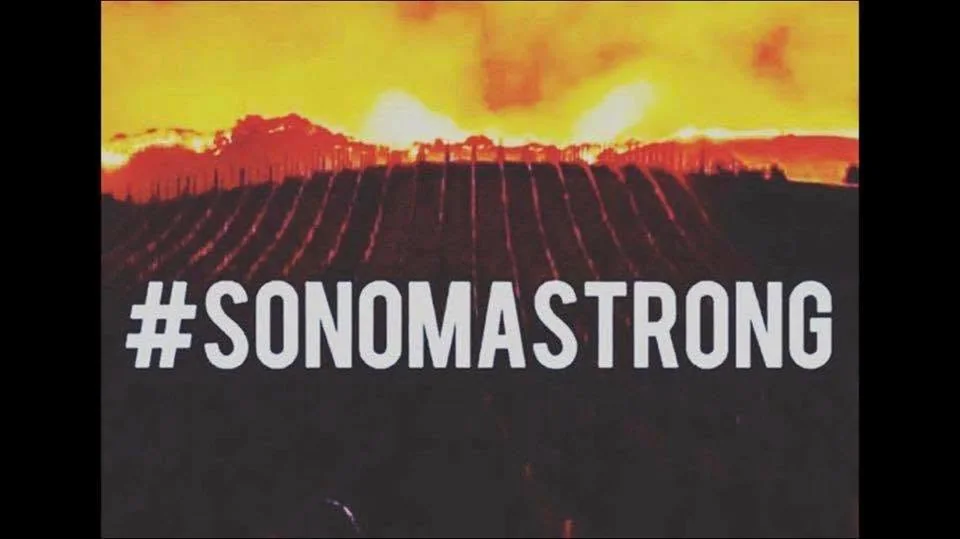
In 2017, devastating wildfires swept through Sonoma County.
Thousands of families lost their homes.
As I watched the destruction, I began thinking about the rebuilding process.
Homeowners were going to need contractors, technology infrastructure, wiring, and countless other services.
I saw an opportunity to help families rebuild by offering standardized pricing for low-voltage wiring and related technology services, making the process more predictable and accessible to middle-class homeowners.
I wanted to take Technical Visionaries to another level.
I brought on a business partner who understood the vision, believed in the opportunity, and intended to invest in growing the company.
But I'd already secured a Small Business Administration loan, which provided enough financing for our immediate plans.
Rather than investing cash at that point, my partner began working alongside me, learning the business and becoming involved in operations.
We were moving forward.
Then, in 2018, my partner suffered a devastating mountain bike accident.
His concussion was so severe that he was expected to be unable to work for at least four months.
That wasn't something I could have predicted.
I kept pushing forward.
Then came the pandemic.
Suddenly, the business of sending technicians into people's homes became much more difficult.
Customers didn't want strangers coming inside.
The world had changed almost overnight.
The company that had experienced substantial growth was now confronting circumstances nobody could have anticipated.
Imagine being a family member watching from the outside.
You might see another business struggling.
But would you stop to ask why?
Would you ask about the years of growth, the partner's accident, or the pandemic?
Or would you simply add another checkmark to your mental list of failures?
That's the part that has always bothered me.
People can be remarkably confident in their judgments when they know remarkably little about the circumstances.
My Great-Grandfather's Adirondack Chairs
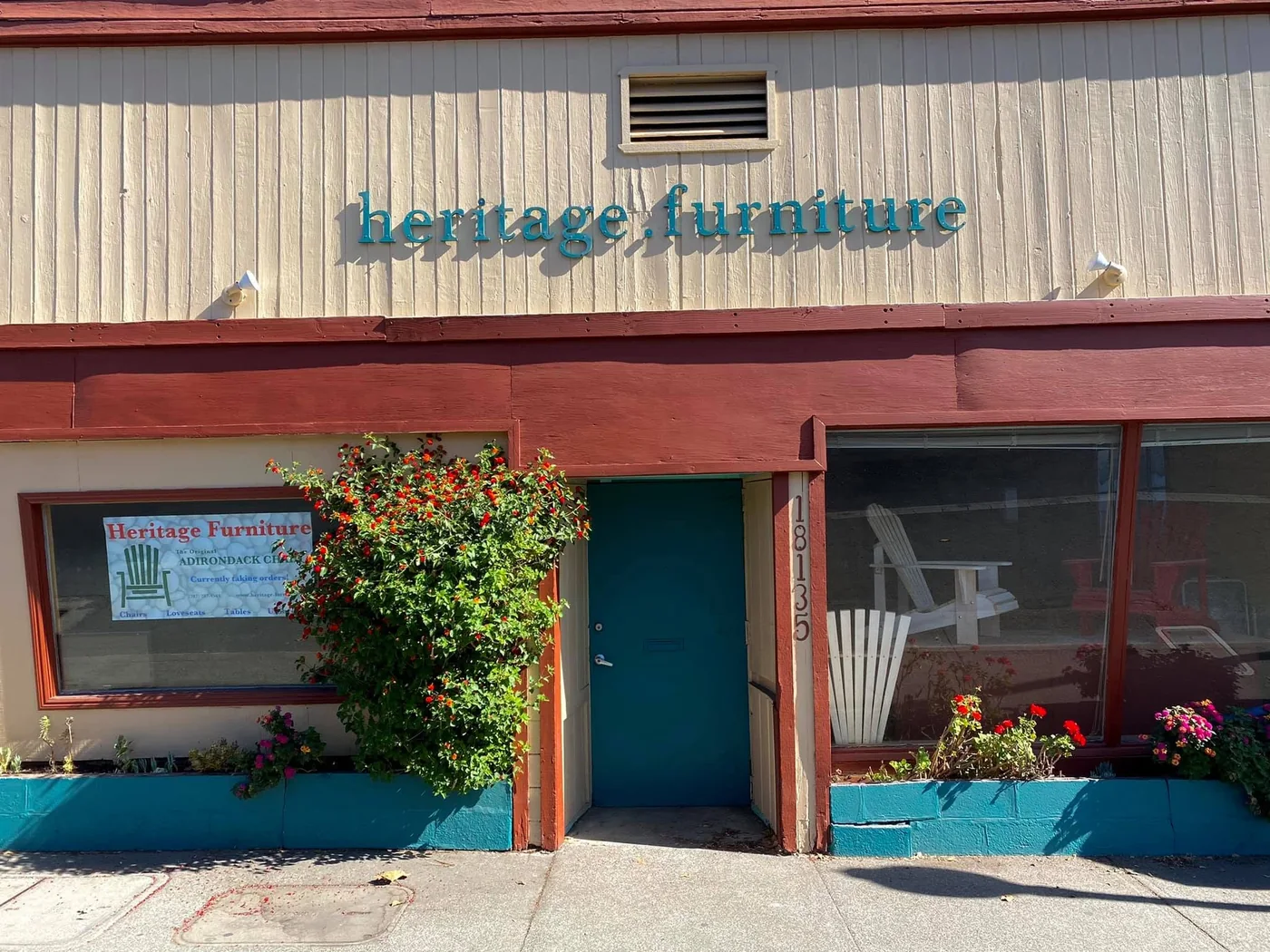

When the pandemic disrupted my business, I needed another way to keep myself busy.
My great-grandfather had an old Adirondack chair pattern dating back to the early 1900s.
The story was that a traveling carpenter had come through Maine and asked my great-grandfather to use his pattern to make some chairs.
My great-grandfather kept a copy.
More than a century later, I decided to start building chairs from that same pattern.
At first, I was making them behind the house.
I advertised through Facebook Marketplace, met customers in person, and exchanged chairs for cash while we all wore masks.
People loved them as they were truly comfortable.
People wanted to buy them.
Eventually, I found a storefront across the street from the famous Fairmont Sonoma Mission Inn.
It sounded like an ideal location.
Unfortunately, the hotel guests rarely ventured off the property into the surrounding neighborhood.
The storefront didn't generate the walk-in traffic I'd hoped for.
So I continued relying largely on word of mouth and Facebook Marketplace.
I expanded into other outdoor furniture and even designed and built my own CNC machine from scratch, bringing my fabrication, electronics, and automated programming skills together into my first complete robotic build.
My first complete robotic build.
I loved engineering.
There was something incredibly satisfying about taking a family design more than a century old, manufacturing a real product, and building the robotic equipment to help produce it. From yacht engineering to custom smart homes and now custom robotics, the thread of building and controlling physical systems remained unbroken.
But I made a significant business mistake.
I'd never operated a retail furniture business.
I knew how to build the products, but I hadn't properly figured out what I needed to charge.
Toward the end, I was selling authentic wooden Adirondack chairs for approximately $400 to $500.
Meanwhile, a business down the road was selling premium synthetic wood versions for around $800.
Looking back, I believe charging another $150 to $200 per chair might have made the difference between keeping the doors open and closing them.
I recognized the pricing problem too late.
The furniture business closed.
That mistake was mine.
But consider what I'd accomplished.
I'd taken a century-old family design, turned it into a manufactured product, opened a storefront, developed a line of outdoor furniture, and built a robotic manufacturing machine.
I learned about production, pricing, overhead, retail sales, and the difference between being a skilled craftsman and running a profitable manufacturing business.
I didn't make the business work financially.
But I learned an enormous amount. And while family members saw another venture ending, they missed how each phase, from marine systems to robotics, was compounding my technical capability for the major technological shifts ahead.
And ultimately, furniture manufacturing wasn't my calling.
Technology was.
Finding Happiness in the Mountains
After the furniture business, I made another important decision.
I moved to Truckee, California.
I'd lived in and visited many places, but Truckee had always been somewhere I felt happiest.
I had a few customers in the area, enough work to keep the bills paid, and an opportunity to build a different kind of life.
My son and I were skiing during the winters, enjoying the fresh mountain air, and spending time in an environment we both loved.
I wasn't running a huge company.
I wasn't making millions of dollars.
But I was enjoying my life with my son.
And then artificial intelligence began changing everything.
The Vision I Couldn't Walk Away From
As artificial intelligence began advancing, I became fascinated by what was happening.
But unlike some of my earlier ideas, I wasn't just looking at what the technology might enable.
I was looking at what could go wrong.
AI was finding its way into mental health applications, medical software, childrens educational apps, and increasingly autonomous systems capable of taking real actions on behalf of people and businesses.
These weren't simply chatbots answering trivia questions.
They were beginning to influence decisions that could affect people's health, finances, privacy, and safety.
And I saw a fundamental problem.
How could a company demonstrate that its AI was following appropriate safety rules?
How could someone independently verify that a safeguard had actually been applied?
How could we prove what happened during an AI interaction rather than simply trusting a company's description of what its software was supposed to do?
I saw the need for technology that could independently enforce safety policies and generate verifiable evidence of what actually happened.
That vision became SASKI Institute.
And this time, something was different.
I wasn't starting from scratch intellectually.
I had decades of engineering experience across mechanical systems, automation, and robotics, alongside years of business lessons and two old business plans that had already taught me I wasn't wrong about direction, only early on timing.
I went back and examined those plans.
The original documents, dated July 2001 and June 2013, contained descriptions of technologies that became commercially significant years later.
Some predictions were remarkably close.
Others were early, partially realized, or simply wrong.
I compiled the history into a separate document, The Calhoun Forecasts. (Found in the citations at the end of this post, it compares my original words with the technologies that eventually emerged. It grades 39 predictions, 16 as strong hits, and it labels the misses as misses, with dates for the comparisons and a list of supporting sources.)
And I had another interesting piece of evidence.
Back in December 2014, I'd published a blog post titled 62 Jobs in 30 Years.
Even then, I was explaining how my experiences across architecture, engineering, electronics, computers, construction, and other industries helped me solve problems that would have been far more difficult if I'd spent my entire career doing just one thing.
I described designing an automated climate-control system for a mansion in Carmel, California, combining my knowledge of architecture, HVAC, home automation, and drafting.
They were skills that had become useful precisely because I could connect them.
And I had written about that more than a decade ago.
I wasn't claiming to be psychic.
I wasn't claiming I'd invented every technology that followed.
But I could see a pattern.
I'd repeatedly recognized where technology was moving, sometimes five, ten, or even more years before particular capabilities became widely available.
And for the first time, I began to truly trust that pattern.
The forecasts also taught me something less flattering. I'm usually right about direction and early on timing, so when something looks one year away, I've learned to plan for five.
Maybe I'd developed an unusual ability to recognize where technology was heading.
Maybe it was simply the result of decades spent obsessively studying how everything worked.
Either way, I couldn't ignore what my own history was telling me.
I'd walked away from ideas before because I didn't have the resources or knowledge to execute them. Then I'd watched versions of those ideas become reality without me.
I didn't want to spend the next five years watching that happen again.
So this time, I decided I wasn't going to give up simply because the road became difficult.
Eighteen Months Later, We're at the Starting Line
After approximately 18 months of work, SASKI Institute has reached a stage where I believe the market is beginning to recognize the opportunity I saw.
We've developed technology that enforces AI safety policies and creates evidence of how AI systems operate.
And we're expanding that work to AI agents capable of interacting with real-world systems.
One challenge I've been watching is the enormous imbalance between advancing AI capabilities and ensuring those capabilities are safe.
There is a ratio of roughly 300 employees accelerating the growth and potential of AI intelligence for every one researcher focused on AI safety and governance.
The imbalance struck me.
We're pouring extraordinary resources into making artificial intelligence smarter, faster, and more capable.
Who's making sure those systems behave appropriately when the stakes are high?
Who's checking whether an AI agent has permission to make a payment, access sensitive information, modify a system, or carry out an action that could affect someone else's life?
And who's creating the evidence to prove those checks happened?
That's what we're working on at SASKI.
And now governments are beginning to pay attention
On October 5, 2026, Utah announced an expansion of its healthcare AI regulatory sandbox, including a network of independent third-party evaluators.
These evaluators will help validate technical attestations, assess how accurately AI decisions are reported, and examine whether healthcare AI systems meet appropriate clinical standards.
You can read the official Utah announcement here.
To be clear, SASKI is not part of Utah's evaluator network. I'm pointing to the program as a sign of where regulators are heading.
This matters because regulators are beginning to move beyond relying solely on companies' claims about their safeguards.
They want independent evidence.
In other words, they're beginning to ask the same question that motivated me to build SASKI.
Don't just tell me your AI has safeguards. Prove that those safeguards actually ran.
Utah's work will gather real-world evidence to help inform future healthcare AI regulations.
I believe efforts like these will eventually help establish which safety approaches work best, and which are little more than promises.
My prediction is that independently verifiable safety controls and attestation will become standard requirements for companies operating medium- and high-risk AI systems.
I believe some industries will eventually require independent certification.
I've seen this pattern before.
A new technology emerges.
People begin discovering its limitations and risks.
Then industries develop standards, verification systems, and rules for responsible use.
And the companies that recognized the need early are positioned to help solve the problem.
Do I know SASKI will become a major company?
No.
I don't have a crystal ball.
But I know the problems I've spent the last 18 months trying to solve are becoming subjects of serious commercial and regulatory attention.
And I know I've seen this type of technological transition before.
What Some of My Friends and Family Saw
Here's where this story becomes personal.
Throughout my adult life, some of the people closest to me apparently concluded that I was someone who simply kept failing.
I think much of that judgment came from a generational difference.
From another's perspective, someone repeatedly changing careers, working for different companies, or starting new businesses could easily look like someone who was lost.
They saw the changes.
They didn't necessarily see the accomplishments.
They didn't ask how Technical Visionaries survived more than 15 years, what I'd accomplished in engineering and design, or why businesses encountered particular setbacks.
And they certainly didn't seem interested in reading the business plans I'd written years before some of those technological ideas became commonplace.
Once they developed a narrative about me, every new venture seemed to reinforce it.
There's a tremendous difference between knowing someone's history and actually understanding it.
And there's an even bigger difference between someone who doesn't understand your vision and someone who decides that your vision must be ridiculous.
Failure Is Not the Opposite of Success
I've failed at things.
I've underestimated costs, pursued opportunities without enough expertise, misjudged timing, and made decisions I'd handle differently today.
I've also survived a catastrophic bicycle accident, serious injuries, an eight-day hospitalization, a business partner's debilitating accident, and a pandemic that disrupted my industry.
Some of those experiences were mistakes.
Others were simply life happening.
But they aren't evidence that I lack ability, judgment, or vision.
A business can fail without its founder being a failure.
A technological prediction can be right even when the person making it lacks the resources to capitalize on it.
And changing direction isn't the same as giving up.
Sometimes the most valuable thing you carry out of an unsuccessful venture is the knowledge you didn't have when you started it.
The People Who Challenge You Versus the People Who Diminish You
Not everyone who questions your ideas is toxic.
I've made enough mistakes to appreciate good advice.
Someone who challenges your pricing, business model, market timing, or technical assumptions might be doing you an enormous favor.
That's constructive criticism.
But someone who continually dismisses your ambitions, ignores your accomplishments, and treats previous setbacks as proof that your next idea is foolish isn't helping you improve.
They're passing judgment.
And when that judgment comes from family and friends, it can be especially painful.
But being related to someone doesn't automatically make their opinion informed or accurate.
Sometimes you need distance.
Not because you hate them.
But because you've worked too hard to let someone else's pessimism become the voice inside your own head.
Maybe I Wasn't Lost. Maybe I Was Early.
I suspect some people reading this will recognize themselves.
Maybe they'll look at the history of my businesses differently.
Maybe they'll read The Calhoun Forecasts and discover that many of the technologies I described long ago eventually became real products and industries.
Maybe they'll realize that what they interpreted as foolishness was sometimes simply a vision they couldn't yet understand.
Or maybe they won't.
I've come to realize that I don't control that.
I can only control what I do next.
And here's what I know.
I started learning technology when personal computers were still new.
I embraced the Internet when the possibilities seemed almost limitless.
I imagined connected homes, digital services, and portable technologies years before many of those ideas became everyday realities.
I envisioned outdoor interactive games before they became mainstream.
And when artificial intelligence began transforming the world, I saw an emerging need for accountability, safety, and verifiable evidence.
Now I'm building toward that future.
Will I get every prediction right?
Of course not.
Will I make more mistakes?
Absolutely.
But after everything I've experienced, I no longer believe that someone else's inability to understand my vision is a good reason for me to abandon it.
And I certainly don't believe that their interpretation of my past should determine my future.
One Last Thing
If you're someone who has spent years pursuing a dream that others don't understand, I want you to remember something.
You don't owe anyone a guarantee of success.
You don't have to convince every friend or family member that your idea will work.
You do have to challenge your assumptions, learn from your mistakes, listen to informed criticism, and be willing to change course when the evidence tells you to.
But never confuse someone else's disbelief with evidence that you're wrong.
Sometimes you're wrong.
Sometimes you're early.
And sometimes you're building something that the people around you simply don't have the experience or imagination to recognize yet.
Protect your curiosity.
Protect your ambition.
Surround yourself with people who ask questions before passing judgment.
And if someone repeatedly tries to make you feel foolish for believing in something you've worked hard to understand, give yourself permission to step away from their pessimism.
Because the biggest failure of my life wouldn't have been any of the businesses that didn't work out.
It would have been allowing the people who couldn't see my future to convince me that I didn't have one.
And now, I want to return to something Steve Jobs said back in 1996.
"Creativity is just connecting things."
He explained that creative people can often connect ideas because they've had more experiences, or they've spent more time thinking about those experiences.
Think about that for a moment.
I've been a carpenter, a yacht crew member, an architectural drafter, a computer technician, a network engineer, a home automation designer, a manufacturer, a robotics builder, and an entrepreneur.
I've worked across industries that, on the surface, seem to have very little in common.
To some of my family, those career changes looked like evidence that I couldn't find my direction.
But what if those experiences were exactly what gave me my direction?
What if spending decades learning gave me the exact multi-disciplinary foundation required to solve complex AI safety enforcement today?
What if the very thing they considered my greatest weakness had become one of my greatest strengths?
I think about my father putting me in front of that Apple computer in 1979.
I think about the little kid who wanted to understand how everything in the world worked.
And I think about all the experiences I've accumulated since then.
The more I look back, the more I understand what Steve Jobs was talking about.
Creativity is connecting things. And sometimes, the people who appear to be wandering are actually collecting the experiences they'll need to build something extraordinary.
I'm not at the finish line.
In many ways, I'm just getting started.
And after everything I've been through, I wouldn't trade the knowledge I've gained for the comfort of never having tried.
Just because you can't see it doesn't mean it isn't real.
And just because I haven't reached it yet doesn't mean I'm not on my way.
Stephen Calhoun
Something happened today that makes this even more interesting
On October 13, 2026, we completed a technical test involving SASKI Agentic and NVIDIA's OpenShell agent sandboxing technology.
In our Linux test with NVIDIA's OpenShell agent sandboxing, the sandboxed agent could reach only the SASKI gateway, blocking direct external attempts.
Acting as the enforcement gateway, SASKI routed actions into three explicit decisions: ALLOW for permitted reads, HOLD for payment requests requiring human approval, and DENY for out-of-policy requests, generating signed receipts for each.
This architecture ensures autonomous agents must route external requests through strict policy enforcement before proceeding.
The agent can be intelligent.
It can be capable.
It can perform useful work.
But intelligence doesn't automatically grant authority.
And that's exactly the distinction SASKI is being built to enforce.
The Market Opportunity
How large could this become?
My preliminary research suggests that somewhere between 50,000 and 200,000 organizations in the United States could eventually fall into the potential market for higher-risk AI safety and governance systems, depending on how the market is defined.
That includes AI developers and deployers across healthcare, mental health, education, finance, human resources, and enterprise AI agents.
My competitive research also suggests that only a relatively small number of US companies, perhaps around 20, are developing comparable forms of specialized AI attestation technology.
Those are working estimates rather than official industry counts.
But even allowing for considerable uncertainty, the potential imbalance between the number of organizations that may need independently verifiable AI safeguards and the number of companies building specialized attestation systems is enormous.
And we're working to be one of those companies.
Note: I needed to write this story to clear my head and leave these reflections behind. As I step into this next chapter with SASKI, I am fully committed to being the focused professional and leader that a CEO needs to be. I have 2 wonderful children and 2 experienced co-founders that share the vision, and I owe them nothing less than being focused and committed.
Related documents